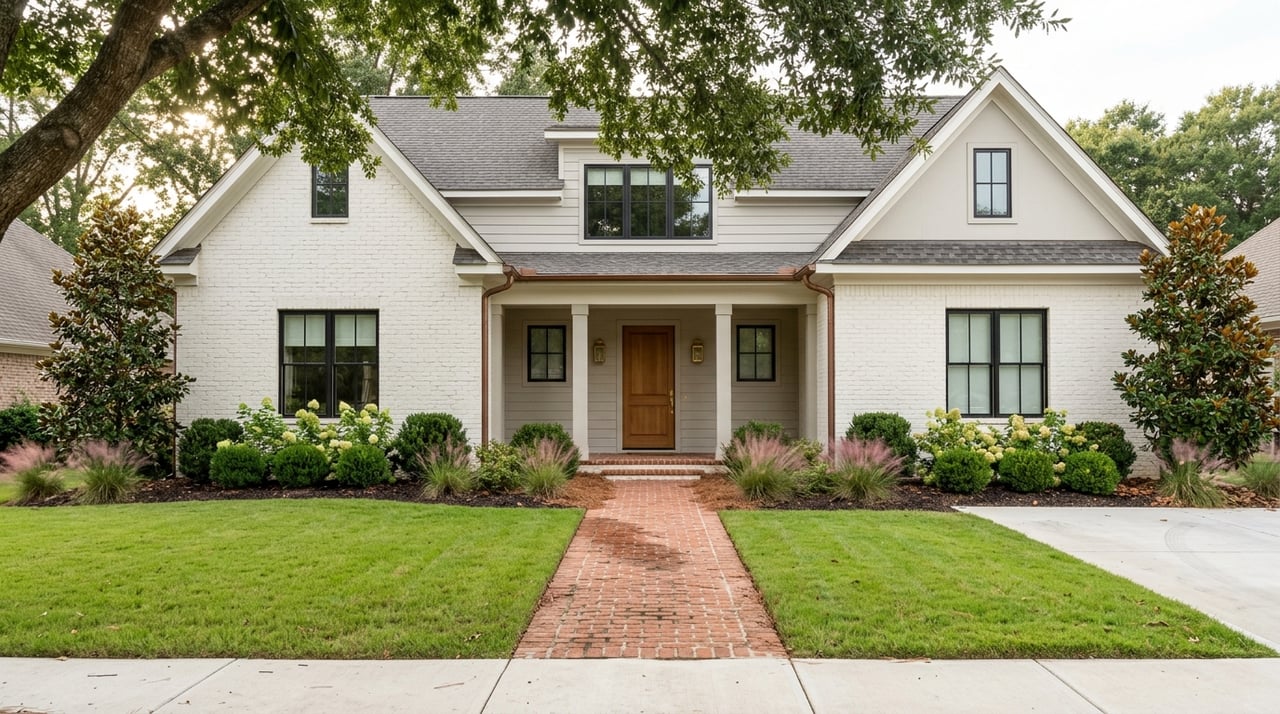
Wondering whether a brand-new home or an established neighborhood is the better fit in Waxhaw? You are not alone. Many buyers here are weighing the appeal of new finishes and builder warranties against the charm of mature trees, larger lots, and more varied settings. This guide will help you compare both paths so you can make a smart decision based on your budget, timeline, and lifestyle. Let’s dive in.
Waxhaw Buyers Need a Local Lens
Waxhaw is not a one-size-fits-all market. The town is known for its historic character, and its downtown remains a cultural and economic center with much of the area included in a National Register Historic District. At the same time, Waxhaw continues to grow, with local planning that aims to preserve character while expanding housing choices.
That mix matters when you start house hunting. New construction in Waxhaw can mean anything from townhomes with HOA-maintained exteriors to low-density communities with 1-acre homesites. Established neighborhoods can mean wooded custom-home pockets, downtown-adjacent areas, or no-HOA acreage outside larger subdivisions.
The pace of the market also shapes your options. Zillow estimates the average Waxhaw home value at $627,621, and homes go pending in about 13 days. Realtor.com also classifies Waxhaw as a seller’s market, which means being clear on your priorities can help you move faster when the right home appears.
What New Construction Means in Waxhaw
New construction in Waxhaw covers a wide range of price points and property styles. Some communities focus on low-maintenance living, while others offer larger homesites and more privacy. The common thread is that newer developments typically reflect current planning rules around open space, recreation, and traffic review.
For example, Village of Waxhaw by Lennar is a townhome community with 32 planned lots, two-car garages, prices around $399,000 to $429,024, HOA dues of $248 per month, and an approximate tax rate of 0.97%. Old Town Village by Tri Pointe is planned for 61 three-story townhomes and lists monthly HOA dues of $245 plus a $1,500 capital contribution.
If you want a single-family option, Forest Creek by Pulte is about one mile from downtown Waxhaw and includes future onsite amenities like a pool and cabana, with homes starting around $482,990. For a lower-density feel, Windermere Farms offers 20 exclusive 1-acre lots about five minutes from downtown.
Why Buyers Choose New Construction
Many buyers like new construction because it can feel more predictable. You may have the chance to select finishes, floor plan options, or upgrades before closing, depending on the stage of construction. You also get newer systems and, in some communities, builder warranty coverage.
That convenience can be especially helpful if you are relocating or want less immediate maintenance. Tri Pointe’s FAQ for Old Town Village notes a 1-2-10 warranty, which may appeal to buyers who want extra peace of mind. In communities with HOA coverage, some routine exterior or common-area responsibilities may also be handled for you.
New construction can also match different lifestyle goals. In Waxhaw, newer housing is not limited to one format. You can find walkable townhome-style options, amenity-focused subdivisions, and larger-lot new communities depending on what matters most to you.
Where New Construction Can Cost More
The base price is only part of the story. In builder communities, your final cost may rise with lot premiums, upgrades, options, and required fees. Tri Pointe notes that options deposits are due when upgrades are selected, which is a good reminder to ask for a full cost breakdown early.
Monthly dues are another key factor. At Old Town Village, the HOA package includes common-area maintenance, trash pickup, public road maintenance, landscaping, management fees, and reserves. At Village of Waxhaw, HOA dues are $248 per month, so it is important to compare what you are paying for against the lifestyle and convenience you want.
Timing can vary too. Some homes are move-in ready, while others are to-be-built. Lennar notes that move-in-ready homes may have fewer or no customizable features, so you may need to choose between personalization and speed.
What Established Neighborhoods Offer
Established neighborhoods in Waxhaw often stand out for lot size, mature landscaping, and a more custom feel. In many cases, you will see more variation from one home to the next. That can appeal to buyers who want a neighborhood with visual character rather than a more uniform streetscape.
Kensington Place is one example of this style. It is a historic community with only 20 homes on heavily wooded sites ranging from 3/4 acre to 1.5 acres. That kind of setting can feel very different from a newer townhome or amenity neighborhood.
Oldstone Forest offers another established option with custom-home character. Current listings have shown lots around 0.92 acres and 2.22 acres. HOA dues referenced in available sources range from $360 annually on one listing to $460 on the HOA site, and the community notes that items like tree removals, roof changes, fences, and decks require HOA approval.
Why Some Buyers Prefer Established Areas
If space is high on your list, established neighborhoods may give you more choices. Larger lots, mature trees, and homes that are set farther apart can be hard to replicate in some newer communities. That is especially true if you want room for outdoor living, privacy, or simply less density.
Established areas may also offer more flexibility. Waxhaw has no-HOA acreage options outside master-planned subdivisions, including examples of homes on 1.06 acres with no HOA and larger parcels where buyers may need well and septic. For some buyers, that freedom is worth taking on more property upkeep.
Location feel also plays a role. Downtown Waxhaw is known for historic architecture, local businesses, public art, and year-round events. If you want a more walkable, historic setting, established neighborhoods near downtown may offer a very different experience than newer communities farther out.
The Tradeoffs With Older Homes
Established neighborhoods come with their own math. While you may save on monthly HOA dues in some areas, you could spend more on maintenance, updates, exterior work, or property systems. If a home is on well and septic, that can affect both upkeep and due diligence.
You may also encounter more varied HOA rules, not always less oversight. As Oldstone Forest shows, some established communities still require approval for exterior changes. That is why it helps to review covenants carefully instead of assuming an older neighborhood automatically means more flexibility.
Inventory can also be limited in certain established pockets. Larger-lot homes, wooded settings, and no-HOA acreage can attract a distinct buyer pool. In a seller’s market, those homes may not last long when priced well.
How to Compare the Two Smartly
The best choice usually comes down to your daily life, not just the age of the home. A newer property may fit you better if you want lower upfront maintenance, modern layouts, and a more defined closing timeline. An established neighborhood may make more sense if you value lot size, privacy, or a less planned feel.
Here are a few practical questions to ask as you compare options:
- Is the home move-in ready or to-be-built?
- How long is the expected construction timeline?
- What do the HOA dues actually cover?
- Is there a capital contribution, special assessment, or tax premium?
- How large is the lot?
- Is the home truly close to downtown Waxhaw, or just in the same ZIP code?
- Will you need to budget for updates, landscaping, or exterior repairs?
- If the property is on well and septic, what does that mean for maintenance?
These questions can help you compare homes on real cost and livability, not just curb appeal.
Think Lifestyle First, Then Resale
In Waxhaw, resale is often tied to lifestyle more than age alone. Smaller-lot urban opportunities remain limited in local planning, while larger-lot and no-HOA options are also relatively distinct products in the market. That creates different buyer pools for townhomes, amenity communities, custom-home neighborhoods, and acreage properties.
In simple terms, scarcity shows up in different ways. A low-maintenance townhome near key destinations may attract one set of buyers, while a 1-acre or no-HOA property may attract another. That does not guarantee one will appreciate faster than the other, but it does mean your future resale story is closely tied to what kind of lifestyle your home offers.
Don’t Skip School Assignment Verification
If school assignment is part of your home search, verify it by address before you write an offer. Union County Public Schools says the Edulog School Assignment Finder is the authoritative source for address-level school assignment verification. This matters because school zones can be highly specific, even within the same general area.
That step is especially important in both new construction and resale. Builder marketing, listing details, and neighborhood assumptions are not the same as address-level verification. Taking a few extra minutes can prevent surprises later.
A Simple Way to Decide
If you want newer systems, warranty coverage, and a more turnkey experience, new construction may be the better fit. If you want mature landscaping, larger lots, custom character, or possible no-HOA flexibility, an established neighborhood may better match your goals. In Waxhaw, both options are real, but they serve different priorities.
The key is to compare the full picture. Monthly dues, upgrade costs, lot size, maintenance needs, and location feel all matter just as much as the list price. If you want help narrowing down the right fit in Waxhaw, Lisa Bass can guide you through the options with local insight and a buyer strategy built around your goals.
FAQs
What is the difference between new construction and established neighborhoods in Waxhaw?
- New construction in Waxhaw often offers newer systems, possible customization, and HOA-managed amenities, while established neighborhoods often offer mature landscaping, larger lots, and more variation in home style and setting.
What should buyers ask about Waxhaw new construction costs?
- Ask whether the home is move-in ready or to-be-built, what the HOA covers, whether there is a capital contribution, how upgrades affect final price, and whether there is a community-specific tax rate.
What are common benefits of established neighborhoods in Waxhaw?
- Common benefits include larger or wooded lots, a more custom neighborhood feel, possible no-HOA options, and in some areas, a setting that feels closer to historic downtown Waxhaw.
How competitive is the Waxhaw housing market for buyers?
- Current market data suggests competition remains active, with Zillow estimating an average home value of $627,621 and homes going pending in about 13 days, while Realtor.com classifies Waxhaw as a seller’s market.
How can buyers verify school assignments for a Waxhaw home?
- Union County Public Schools says the Edulog School Assignment Finder is the authoritative source for verifying school assignment by address.
Are all new construction homes in Waxhaw dense subdivisions?
- No. Waxhaw new construction includes townhome communities, amenity-focused single-family neighborhoods, and lower-density options such as 1-acre homesites.
Do established Waxhaw neighborhoods always have no HOA?
- No. Some established neighborhoods have HOAs and may require approval for certain exterior changes, while other properties outside larger subdivisions may offer no-HOA acreage options.
Is living near downtown Waxhaw different from living in newer communities farther out?
- Yes. Downtown-adjacent established neighborhoods can offer a more historic and walkable setting, while newer communities farther out may offer different tradeoffs such as newer homes, planned amenities, or larger new homesites.